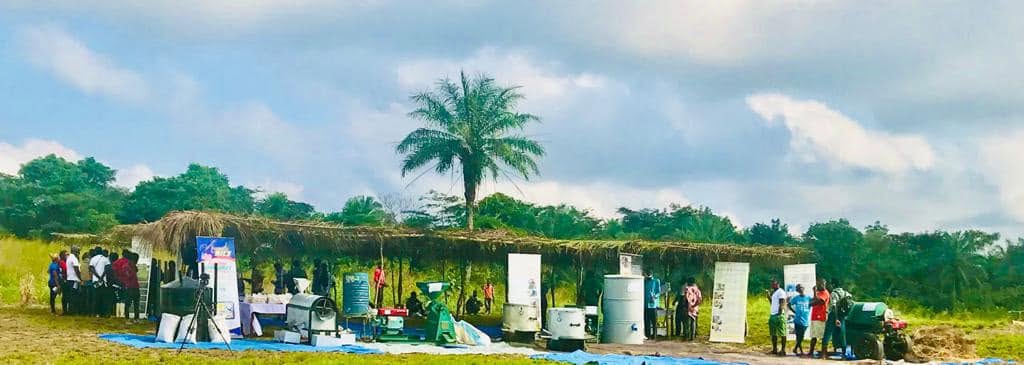
TNC had a learning exchange today about livelihood interventions:
Key Question: Why do Alternative Livelihood Projects fall short of the intended targets especially around Protected Areas and Community Forests?
Here’s what We think:
1. Most projects are run and funded through small, short-term grants and are struggling to achieve their objectives as a result of - available time, funding, and capacity challenges;
2. Project feasibilities are not detailed, nor do they fully integrate community’s livelihood aspirations from a short-medium-long term perspective;
3. Project monitoring to track impacts are mostly inconsistent with process monitoring, it is prudent to make adaptive management throughout livelihood projects implementation;
4. Livelihood projects must come with conditionalities and sanctions - the alternatives offered must transition from being perceived as “additional activities” to “substitution activities”
5. Prior to implementation, all project managers must ensure their interventions follow the best practices of Integrated Conservation and Development Practices (ICDP) - I would urge NRM practitioners to master this playbook and follow it.
6. Monitoring, Evaluation and Learning (MEL) should be allocated for their own funding;
7. Donors must work with local partners (preferably communities and Implementing Partners) to design the Theory of Change and periodically implement a self-diagnostic test to ensure interventions are consistent with investment and outcomes;
8. If you ask me, - there should be NO small grants livelihood projects around Protected Areas or Community Forest - instead, each Protected Area should be given to a single Conservation Institution for a period of 15 years with an interval monitoring of every 5 years.
9. Conservation partners must - create sustainable funding schemes (Trust funds), invest in enterprise development, implement a robust integrated buffer zone management system to reduce threats to biodiversity and improve community’s wellbeing;
10. Regulatory institutions such as FDA, EPA, MOA must be capacitated - Technically, Logistically and Legally, to ensure livelihood programs are monitored and aligned with long term Protected Area Management objectives under the National Forest Reform Law - 2006